
Difference Between a Tennis Ball and a Padel Ball.
Many people interested in padel think the same thing the first time: “Those are just tennis balls, right?”
Well, they actually do look very similar: same color, same felt surface, similar size. 🤔
👉 But: the real difference between a tennis ball and a padel ball is in the details, and you notice it immediately when playing.
Are padel balls the same as tennis balls?
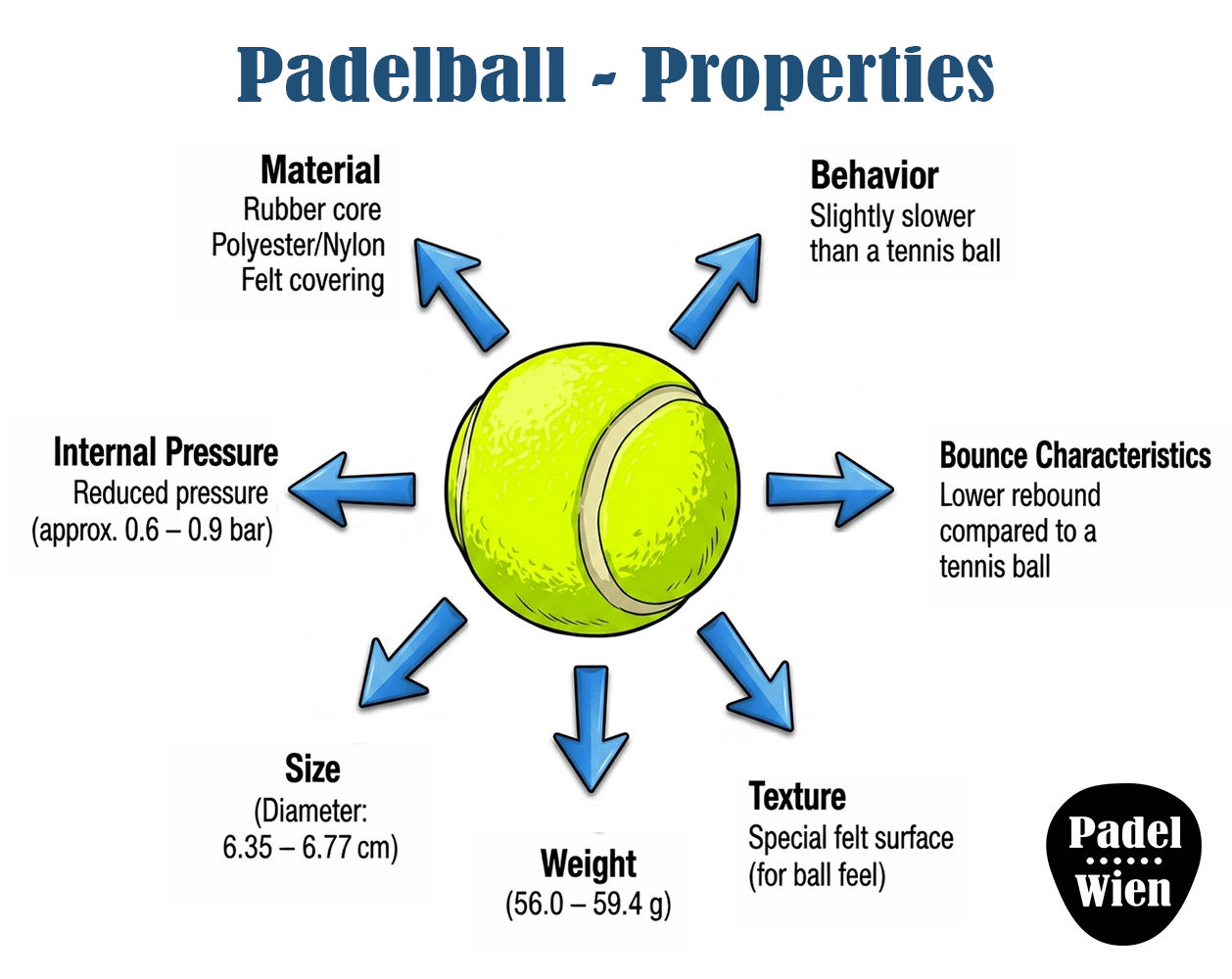
No they aren’t the same. The most important difference between a tennis ball and a padel ball is the internal pressure.
This difference is invisible, but it has a huge impact on the feel of the game. A padel ball is slightly softer and therefore much easier to control.
| Property | Tennis ball | Padel ball |
| Weight | between 56.7 and 58.5 g | between 56.0 and 59.4 g |
| Diameter | between 6.35 and 6.67 cm | between 6.35 and 6.70 cm |
| Internal pressure | 14 psi (0.97 bar) |
10-11 psi (0.7 - 0.8 bar) |
| Speed | faster | slower |
| Bounce | higher | more controlled |
| Price per Ball | approx. € 1.20 - 2.00 | approx. € 1.50 - 2.80 |
How does a padel ball actually work?
A padel ball may seem simple, but there’s actually a lot of physics behind it.
A padel ball consists of:
- a rubber core with internal air pressure
- a felt surface
- the characteristic seam structure
👉 This seam is crucial for every padel ball because it:
- creates air resistance
- allows spin
- stabilizes the flight path
- improves control
Without this structure, a padel ball would be much faster and far harder to control.

Why is a padel ball slower?
A padel ball is intentionally slower than a tennis ball.
That’s because padel is a sport where control is more important than pure speed.
The lower pressure inside the padel ball means that:
- the ball travels more slowly
- it bounces lower
- rallies last longer
👉 This leads to the longer rallies that are typical in padel.
Can I play padel with tennis balls?
Many people try it, but a real padel ball is clearly the better choice.
A tennis ball is:
- too fast
- bounces too high
- harder to control
- can increase the risk of injuries
A proper padel ball, on the other hand, provides:
- better control
- longer rallies
- more enjoyable gameplay
👉 That’s why you should always use real padel balls when playing padel.
Why are padel balls yellow?
The color of a padel ball is intentionally chosen for maximum visibility:
- in sunlight
- under floodlights
- for both players and spectators
In fact, padel inherited this color from tennis.
How often should you replace padel balls?
A padel ball loses pressure relatively quickly. As soon as you open the can, the pressure loss begins.
Typically, players replace padel balls:
- casual players: every 2–4 matches
- intensive players / professionals: every 1–2 hours
👉 After that, the ball feels noticeably slower and bounces less.
How can you make padel balls last longer?
Many experienced players use so-called “pressure containers” to store their balls. These help restore pressure after playing and provide:
- longer lifespan
- more consistent feel
- lower costs
Packaging: padel balls vs tennis balls
One detail many people overlook: padel and tennis balls are usually sold in different quantities.
- Padel balls → cans of 3
- Tennis balls → cans of 4
Both types of balls are packaged under pressure.
Which padel balls are popular in Vienna?
In Vienna, you’ll almost always see the same models being used:
- Head Padel Pro+ / Pro S+
- Wilson Premier Padel
- Babolat Court Padel X3
- Bullpadel Premium Pro
Are there training padel balls?
Yes, although they are less common than training tennis balls.
A training padel ball may:
- come in different colors
- have lower pressure
- be slower
Updated on July 12th 2026 by Gérald Piletta
Published on May 9th, 2026 by Gérald Piletta
Back to the overview: More about Padel